Buy wmqv.com ?
We are moving the project
wmqv.com .
Are you interested in purchasing the domain
wmqv.com ?
domain@kv-gmbh.de · 0541-91531010
Buy wmqv.com ?
What is a resultant wave in physics?
In physics, a resultant wave is the combination of two or more individual waves that are superimposed on each other. When waves with different amplitudes, frequencies, or phases overlap, they create a new wave pattern known as the resultant wave. The properties of the resultant wave, such as its amplitude, frequency, and phase, are determined by the properties of the individual waves that combine to form it. Resultant waves are important in understanding phenomena such as interference, diffraction, and standing waves. **
What is the resultant of a triangular load?
The resultant of a triangular load is the single force that can replace the distributed load while producing the same effect on the structure. It is the equivalent concentrated force that acts at a specific point on the structure. The magnitude and direction of the resultant force depend on the shape and intensity of the triangular load. Calculating the resultant force is important in structural analysis to simplify the analysis of complex loads. **


Similar search terms for Resultant
Top-Angebote
Products related to Resultant:
-
Apple AirPods Max 2 Wireless Over-Ear Headphones Starlight – Active Noise Cancellation, Adaptive Audio, Live Translation & Personalised Spatial Audio.gadcet-pdp{--g-green:#00a651;color:#1f2430;line-height:1.55;font-size:inherit;max-width:760px}.gadcet-pdp>*:first-child{margin-top:0}.gadcet-pdp p{margin:0 0.9em}.gadcet-pdp h3{font-size:1.05em;font-weight:600;color:#11161f;margin:1.4em 0.5em;padding-left:.5em;border-left:3px solid var(--g-green);border-radius:0;line-height:1.3}.gadcet-pdp ul{list-style:none!important;margin:0 0.9em;padding:0!important}.gadcet-pdp ul li{position:relative;padding:.1em 0.1em 1.5em;margin:0}.gadcet-pdp ul li::before{content:"";position:absolute;left:.16em;top:.45em;width:.36em;height:.66em;border:solid var(--g-green);border-width:0.14em.14em 0;transform:rotate(45deg)}.gadcet-pdp table{width:100%;border-collapse:collapse;margin:.3em 0 1em;font-size:.95em;border:1px solid #e7e9ee!important;border-radius:8px;overflow:hidden}.gadcet-pdp table td{padding:.5em.8em;border-bottom:1px solid #eef0f4!important;vertical-align:top}.gadcet-pdp table tr:last-child td{border-bottom:0!important}.gadcet-pdp table tr:nth-child(even){background:#f7f9f8}.gadcet-pdp table td:first-child{font-weight:600;color:#454c59;width:40%}@media (max-width:600px){.gadcet-pdp table td:first-child{width:42%}} Experience immersive Apple audio with the AirPods Max 2 Wireless Over-Ear Headphones in Starlight — built for focused listening, clearer calls and seamless everyday use with Active Noise Cancellation, Adaptive Audio and Personalised Spatial Audio. Key Features Active Noise Cancellation helps reduce unwanted background noise for more focused listening. Adaptive Audio intelligently blends noise control and awareness as your surroundings change. Personalised Spatial Audio with dynamic head tracking creates a more immersive soundstage for supported content. Live Translation support for real-time conversations across selected languages when paired with a compatible Apple Intelligence-enabled iPhone. Apple H2 headphone chip in each ear cup for intelligent audio processing and smooth Apple device use. Bluetooth 5.3 wireless technology for cable-free listening. USB-C charging, plus USB-C wired listening for lossless audio and ultra-low latency with compatible content and apps. Up to 20 hours of listening time with Active Noise Cancellation enabled. A 5-minute charge provides around 1.5 hours of listening time. Nine microphones support noise control and voice pickup for calls, meetings and voice commands. Benefits Stay immersed on commutes, flights, study sessions and busy workdays. Enjoy films, music and supported content with a wider, more cinematic feel. Move smoothly between compatible Apple devices such as iPhone, iPad and Mac. Brand new, ready to enjoy straight from the box. Specifications Brand Apple Model AirPods Max 2 Colour Starlight Type Wireless over-ear headphones Audio Features Active Noise Cancellation, Adaptive Audio, Transparency mode, Personalised Spatial Audio Chip Apple H2 headphone chip in each ear cup Microphones Nine microphones total Connectivity Bluetooth 5.3 wireless technology...467,00 £*Shipping: 0,00 £Secure redirect to the provider
-
Lisciani Barbie Bluetooth Headphones for Kids, Kid-Friendly Wireless Audio, Ages Four and UpLisciani Barbie Bluetooth headphones bring kid-friendly wireless audio to playtime for children aged four and up. The Lisciani brand combines a trusted toy heritage with practical tech, delivering Bluetooth headphones designed for kids and easy for parents to trust. These headphones are designed for everyday adventures and feature a durable, lightweight construction that fuses Barbie-themed style with comfort. They're perfect for car rides, classroom activities, or quiet-time listening. The headphones pair with a smartphone or tablet in seconds and switch devices with ease. A safe volume limiter protects young hearing during hours of listening. The headphones have a lightweight, adjustable headband with soft, cushioned ear cups for all-day comfort. The Barbie-themed design is a familiar look that kids will love to wear. They're ideal for kids aged four and up.22,66 £*Shipping: 3,95 £Secure redirect to the provider
-
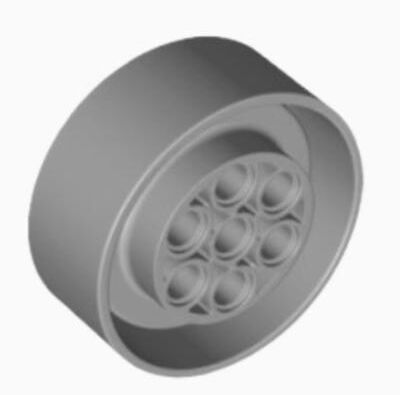
Lush Living Finds Perforated Brick Assembly Toy Accessories With Technology Mechanical Wheels Perforated Brick Assembly Toy Accessories With Technology Mechanical WheelsEnhance Creativity with Technology Mechanical Wheels Unlock the power of innovation with our technology mechanical wheels, designed specifically for perforated brick assembly toy accessories. Whether you are a hobbyist or a seasoned builder, these...43,97 $*Shipping: 0,00 $Secure redirect to the provider



-
What formula do I use to calculate the resultant force?
To calculate the resultant force, you can use the formula: Resultant force = √(Fx^2 + Fy^2) Where Fx is the force in the x-direction and Fy is the force in the y-direction. This formula is derived from the Pythagorean theorem, which states that the magnitude of the resultant force is equal to the square root of the sum of the squares of the individual forces in each direction. **
-
What is the resultant vector with two lengths and angles?
The resultant vector with two lengths and angles is the single vector that represents the combined effect of the two original vectors. To find the resultant vector, we use the parallelogram law of vector addition, which involves adding the two vectors tip to tail and then drawing the diagonal of the parallelogram formed. The length and angle of the resultant vector can be calculated using trigonometric functions such as sine and cosine. This resultant vector represents the combined effect of the original vectors in terms of both magnitude and direction. **
-
What is the angle when two forces form a resultant?
When two forces form a resultant, the angle between the two forces can be found using the law of cosines. The angle can be calculated using the formula: cos(θ) = (F1^2 + F2^2 - R^2) / (2 * F1 * F2), where F1 and F2 are the magnitudes of the two forces and R is the magnitude of the resultant force. This angle represents the direction of the resultant force in relation to the original forces. **
-
What is the graphical resultant force of more than 3 forces?
The graphical resultant force of more than 3 forces is found by using the polygon method. This method involves drawing the forces as vectors with their tails at the same point, and then completing the polygon by drawing the final side from the head of the last vector to the tail of the first vector. The resultant force is then the vector that closes the polygon. This method allows us to find the magnitude and direction of the resultant force by using vector addition. **


How do you calculate the resultant force without using the cosine law?
To calculate the resultant force without using the cosine law, you can use the Pythagorean theorem. First, you would calculate the horizontal and vertical components of the forces. Then, you would use the Pythagorean theorem to find the magnitude of the resultant force by taking the square root of the sum of the squares of the horizontal and vertical components. Finally, you can use trigonometric functions to find the direction of the resultant force. **
How do you calculate the resultant forces F1 and F2 in Newtons in physics?
To calculate the resultant forces F1 and F2 in Newtons in physics, you need to first determine the individual forces acting on an object. Once you have identified these forces, you can use vector addition to find the resultant force. This involves adding the forces together taking into account their direction and magnitude. The resultant force F1 and F2 can be calculated using the formula F = F1 + F2, where F is the resultant force. **
Top-Angebote
Products related to Resultant:
-
Apple AirPods Max 2 Wireless Over-Ear Headphones Starlight – Active Noise Cancellation, Adaptive Audio, Live Translation & Personalised Spatial Audio.gadcet-pdp{--g-green:#00a651;color:#1f2430;line-height:1.55;font-size:inherit;max-width:760px}.gadcet-pdp>*:first-child{margin-top:0}.gadcet-pdp p{margin:0 0.9em}.gadcet-pdp h3{font-size:1.05em;font-weight:600;color:#11161f;margin:1.4em 0.5em;padding-left:.5em;border-left:3px solid var(--g-green);border-radius:0;line-height:1.3}.gadcet-pdp ul{list-style:none!important;margin:0 0.9em;padding:0!important}.gadcet-pdp ul li{position:relative;padding:.1em 0.1em 1.5em;margin:0}.gadcet-pdp ul li::before{content:"";position:absolute;left:.16em;top:.45em;width:.36em;height:.66em;border:solid var(--g-green);border-width:0.14em.14em 0;transform:rotate(45deg)}.gadcet-pdp table{width:100%;border-collapse:collapse;margin:.3em 0 1em;font-size:.95em;border:1px solid #e7e9ee!important;border-radius:8px;overflow:hidden}.gadcet-pdp table td{padding:.5em.8em;border-bottom:1px solid #eef0f4!important;vertical-align:top}.gadcet-pdp table tr:last-child td{border-bottom:0!important}.gadcet-pdp table tr:nth-child(even){background:#f7f9f8}.gadcet-pdp table td:first-child{font-weight:600;color:#454c59;width:40%}@media (max-width:600px){.gadcet-pdp table td:first-child{width:42%}} Experience immersive Apple audio with the AirPods Max 2 Wireless Over-Ear Headphones in Starlight — built for focused listening, clearer calls and seamless everyday use with Active Noise Cancellation, Adaptive Audio and Personalised Spatial Audio. Key Features Active Noise Cancellation helps reduce unwanted background noise for more focused listening. Adaptive Audio intelligently blends noise control and awareness as your surroundings change. Personalised Spatial Audio with dynamic head tracking creates a more immersive soundstage for supported content. Live Translation support for real-time conversations across selected languages when paired with a compatible Apple Intelligence-enabled iPhone. Apple H2 headphone chip in each ear cup for intelligent audio processing and smooth Apple device use. Bluetooth 5.3 wireless technology for cable-free listening. USB-C charging, plus USB-C wired listening for lossless audio and ultra-low latency with compatible content and apps. Up to 20 hours of listening time with Active Noise Cancellation enabled. A 5-minute charge provides around 1.5 hours of listening time. Nine microphones support noise control and voice pickup for calls, meetings and voice commands. Benefits Stay immersed on commutes, flights, study sessions and busy workdays. Enjoy films, music and supported content with a wider, more cinematic feel. Move smoothly between compatible Apple devices such as iPhone, iPad and Mac. Brand new, ready to enjoy straight from the box. Specifications Brand Apple Model AirPods Max 2 Colour Starlight Type Wireless over-ear headphones Audio Features Active Noise Cancellation, Adaptive Audio, Transparency mode, Personalised Spatial Audio Chip Apple H2 headphone chip in each ear cup Microphones Nine microphones total Connectivity Bluetooth 5.3 wireless technology...467,00 £*Shipping: 0,00 £Secure redirect to the provider
-
What is a resultant wave in physics?
In physics, a resultant wave is the combination of two or more individual waves that are superimposed on each other. When waves with different amplitudes, frequencies, or phases overlap, they create a new wave pattern known as the resultant wave. The properties of the resultant wave, such as its amplitude, frequency, and phase, are determined by the properties of the individual waves that combine to form it. Resultant waves are important in understanding phenomena such as interference, diffraction, and standing waves. **
-
What is the resultant of a triangular load?
The resultant of a triangular load is the single force that can replace the distributed load while producing the same effect on the structure. It is the equivalent concentrated force that acts at a specific point on the structure. The magnitude and direction of the resultant force depend on the shape and intensity of the triangular load. Calculating the resultant force is important in structural analysis to simplify the analysis of complex loads. **
-
What formula do I use to calculate the resultant force?
To calculate the resultant force, you can use the formula: Resultant force = √(Fx^2 + Fy^2) Where Fx is the force in the x-direction and Fy is the force in the y-direction. This formula is derived from the Pythagorean theorem, which states that the magnitude of the resultant force is equal to the square root of the sum of the squares of the individual forces in each direction. **
-
What is the resultant vector with two lengths and angles?
The resultant vector with two lengths and angles is the single vector that represents the combined effect of the two original vectors. To find the resultant vector, we use the parallelogram law of vector addition, which involves adding the two vectors tip to tail and then drawing the diagonal of the parallelogram formed. The length and angle of the resultant vector can be calculated using trigonometric functions such as sine and cosine. This resultant vector represents the combined effect of the original vectors in terms of both magnitude and direction. **
Similar search terms for Resultant
-
Lisciani Barbie Bluetooth Headphones for Kids, Kid-Friendly Wireless Audio, Ages Four and UpLisciani Barbie Bluetooth headphones bring kid-friendly wireless audio to playtime for children aged four and up. The Lisciani brand combines a trusted toy heritage with practical tech, delivering Bluetooth headphones designed for kids and easy for parents to trust. These headphones are designed for everyday adventures and feature a durable, lightweight construction that fuses Barbie-themed style with comfort. They're perfect for car rides, classroom activities, or quiet-time listening. The headphones pair with a smartphone or tablet in seconds and switch devices with ease. A safe volume limiter protects young hearing during hours of listening. The headphones have a lightweight, adjustable headband with soft, cushioned ear cups for all-day comfort. The Barbie-themed design is a familiar look that kids will love to wear. They're ideal for kids aged four and up.22,66 £*Shipping: 3,95 £Secure redirect to the provider
-
Lush Living Finds Perforated Brick Assembly Toy Accessories With Technology Mechanical Wheels Perforated Brick Assembly Toy Accessories With Technology Mechanical WheelsEnhance Creativity with Technology Mechanical Wheels Unlock the power of innovation with our technology mechanical wheels, designed specifically for perforated brick assembly toy accessories. Whether you are a hobbyist or a seasoned builder, these...43,97 $*Shipping: 0,00 $Secure redirect to the provider
-
Sony WH-1000XM5SA Special Edition Wireless Noise Cancelling Over-Ear Headphones Bluetooth Hi-Res Audio - BlackThe Sony WH-1000XM5SA Special Edition delivers premium wireless audio with Sony's advanced noise cancelling technology, designed to provide an immersive listening experience in busy environments. The Special Edition includes a matching soft carrying case for convenient storage and portability. Featuring Sony's HD Noise Cancelling Processor QN1 and Integrated Processor V1, the headphones use multiple microphones and Auto NC Optimizer to automatically optimise noise cancellation based on your surroundings and wearing conditions. Ambient Sound Mode and Quick Attention make it easy to stay aware of your surroundings when needed. The specially developed 30mm drivers deliver detailed, high-resolution sound, while LDAC support provides High-Resolution Audio Wireless playback. DSEE Extreme technology can also restore detail to compressed digital music files for a richer listening experience. Precise Voice Pickup Technology uses four beamforming microphones and AI-based noise reduction to provide clear calls, while multipoint Bluetooth allows connection to two devices simultaneously. With up to 30 hours of battery life with noise cancelling enabled and quick charging support, the WH-1000XM5SA is well suited to travel, work and everyday listening.173,49 £*Shipping: 0,00 £Secure redirect to the provider
-
Sonos Five HiFi Speaker with WiFi, 3.5 mm Line In, Support for Hi-Res Audio Streaming - Black, New.gadcet-pdp{--g-green:#00a651;color:#1f2430;line-height:1.55;font-size:inherit;max-width:760px}.gadcet-pdp>*:first-child{margin-top:0}.gadcet-pdp p{margin:0 0.9em}.gadcet-pdp h3{font-size:1.05em;font-weight:600;color:#11161f;margin:1.4em 0.5em;padding-left:.5em;border-left:3px solid var(--g-green);border-radius:0;line-height:1.3}.gadcet-pdp ul{list-style:none!important;margin:0 0.9em;padding:0!important}.gadcet-pdp ul li{position:relative;padding:.1em 0.1em 1.5em;margin:0}.gadcet-pdp ul li::before{content:"";position:absolute;left:.16em;top:.45em;width:.36em;height:.66em;border:solid var(--g-green);border-width:0.14em.14em 0;transform:rotate(45deg)}.gadcet-pdp table{width:100%;border-collapse:collapse;margin:.3em 0 1em;font-size:.95em;border:1px solid #e7e9ee!important;border-radius:8px;overflow:hidden}.gadcet-pdp table td{padding:.5em.8em;border-bottom:1px solid #eef0f4!important;vertical-align:top}.gadcet-pdp table tr:last-child td{border-bottom:0!important}.gadcet-pdp table tr:nth-child(even){background:#f7f9f8}.gadcet-pdp table td:first-child{font-weight:600;color:#454c59;width:40%}@media (max-width:600px){.gadcet-pdp table td:first-child{width:42%}} Bring room-filling, high-fidelity sound to your home with the Sonos Five in Black. Enjoy high-resolution lossless audio streaming over WiFi, flexible wired playback and convenient multi-room listening. Key Features Six Class-D digital amplifiers tuned to the speaker's acoustic architecture Three tweeters for detailed highs and a wide stereo soundstage Three midwoofers for balanced vocals, instruments and bass WiFi streaming with support for high-resolution lossless audio 3.5 mm line-in for compatible turntables, CD players, computers and other audio devices Apple AirPlay 2 support for streaming from compatible Apple devices Trueplay tuning using a supported iOS device Horizontal or vertical placement with orientation-aware processing Can be paired with another Sonos Five for a wider stereo soundstage Capacitive touch controls and a 10/100 Ethernet port Benefits Enjoy powerful, detailed music playback with clear vocals and deep bass Connect wireless and wired audio sources to one versatile speaker Expand your listening across compatible Sonos speakers in multiple rooms Fine-tune bass, treble and loudness through the Sonos app Specifications Brand Sonos Model Five Product type HiFi wireless speaker Colour Black Finish Matte Amplifiers 6 Class-D digital amplifiers Tweeters 3 Midwoofers 3 Wireless connectivity WiFi and Apple AirPlay 2 Wired connectivity 3.5 mm line-in and 10/100 Ethernet WiFi support 802.11a/b/g/n, 2.4 GHz or 5 GHz router support EAN 8717755777140 What You'll Receive One Sonos Five HiFi speaker in Black, supplied in your selected New or Used - Like New condition. Ideal For Ideal for music lovers seeking high-quality home audio, multi-room listening or a speaker with line-in connectivity for compatible turntables, CD players and computers.548,98 £*Shipping: 0,00 £Secure redirect to the provider
-
What is the angle when two forces form a resultant?
When two forces form a resultant, the angle between the two forces can be found using the law of cosines. The angle can be calculated using the formula: cos(θ) = (F1^2 + F2^2 - R^2) / (2 * F1 * F2), where F1 and F2 are the magnitudes of the two forces and R is the magnitude of the resultant force. This angle represents the direction of the resultant force in relation to the original forces. **
-
What is the graphical resultant force of more than 3 forces?
The graphical resultant force of more than 3 forces is found by using the polygon method. This method involves drawing the forces as vectors with their tails at the same point, and then completing the polygon by drawing the final side from the head of the last vector to the tail of the first vector. The resultant force is then the vector that closes the polygon. This method allows us to find the magnitude and direction of the resultant force by using vector addition. **
-
How do you calculate the resultant force without using the cosine law?
To calculate the resultant force without using the cosine law, you can use the Pythagorean theorem. First, you would calculate the horizontal and vertical components of the forces. Then, you would use the Pythagorean theorem to find the magnitude of the resultant force by taking the square root of the sum of the squares of the horizontal and vertical components. Finally, you can use trigonometric functions to find the direction of the resultant force. **
-
How do you calculate the resultant forces F1 and F2 in Newtons in physics?
To calculate the resultant forces F1 and F2 in Newtons in physics, you need to first determine the individual forces acting on an object. Once you have identified these forces, you can use vector addition to find the resultant force. This involves adding the forces together taking into account their direction and magnitude. The resultant force F1 and F2 can be calculated using the formula F = F1 + F2, where F is the resultant force. **
* All prices are inclusive of VAT and, if applicable, plus shipping costs. The offer information is based on the details provided by the respective shop and is updated through automated processes. Real-time updates do not occur, so deviations can occur in individual cases. ** Note: Parts of this content were created by AI.